
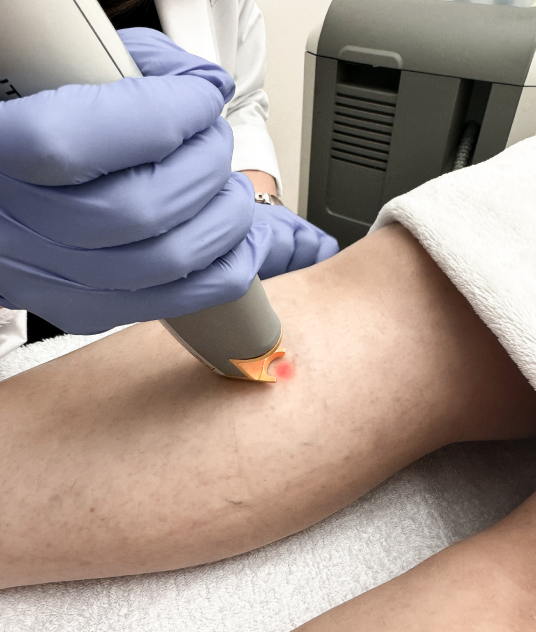
Visible veins along the legs are a common concern and can affect your confidence in your body, especially in the warmer months. Our skilled providers can help by treating vascular lesions on the legs with the CUTERA® Nd:YAG 1064 nm laser, including the appearance of spider veins, angiomas, and deeper reticular veins. A variety of factors can contribute to the development of bothersome leg veins, including hormones, genetics, and regularly sitting or standing for long periods of time. Spider veins develop when the valves in deep functioning veins weaken and some blood leaks out, becoming visible beneath the skin.
Get Started
Real Patient Results
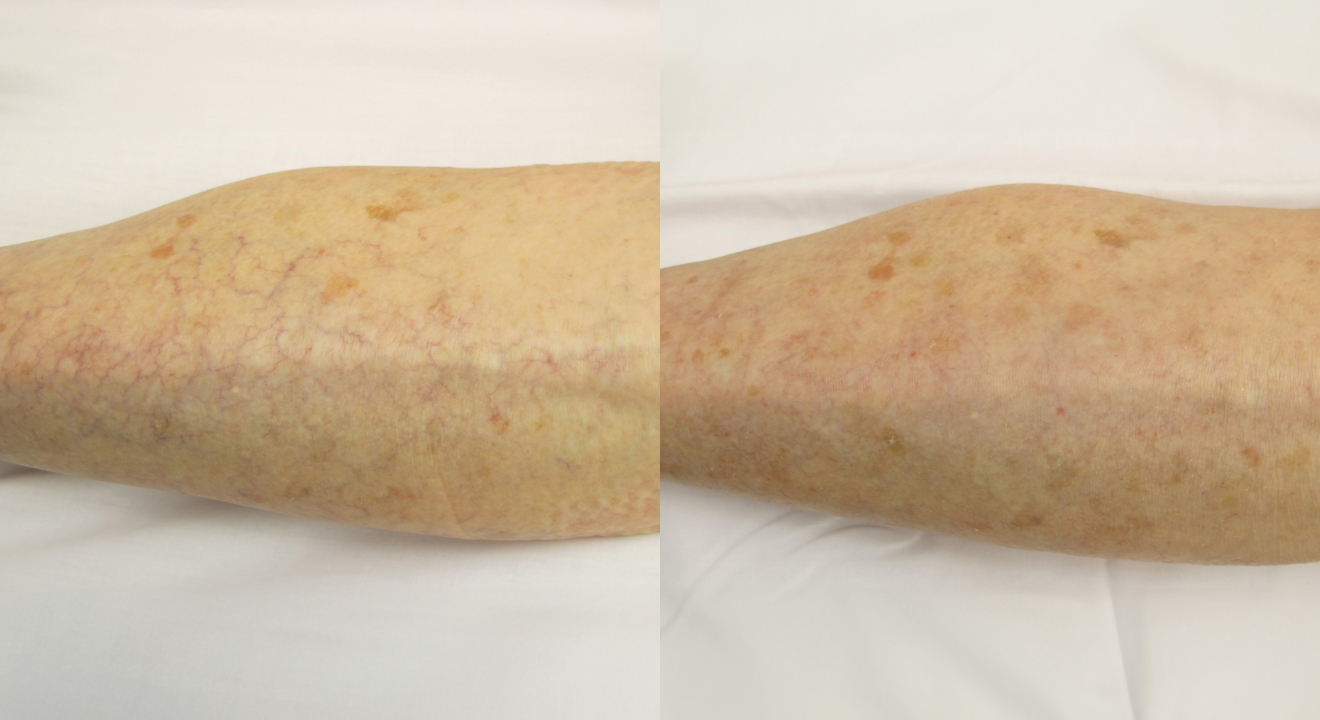
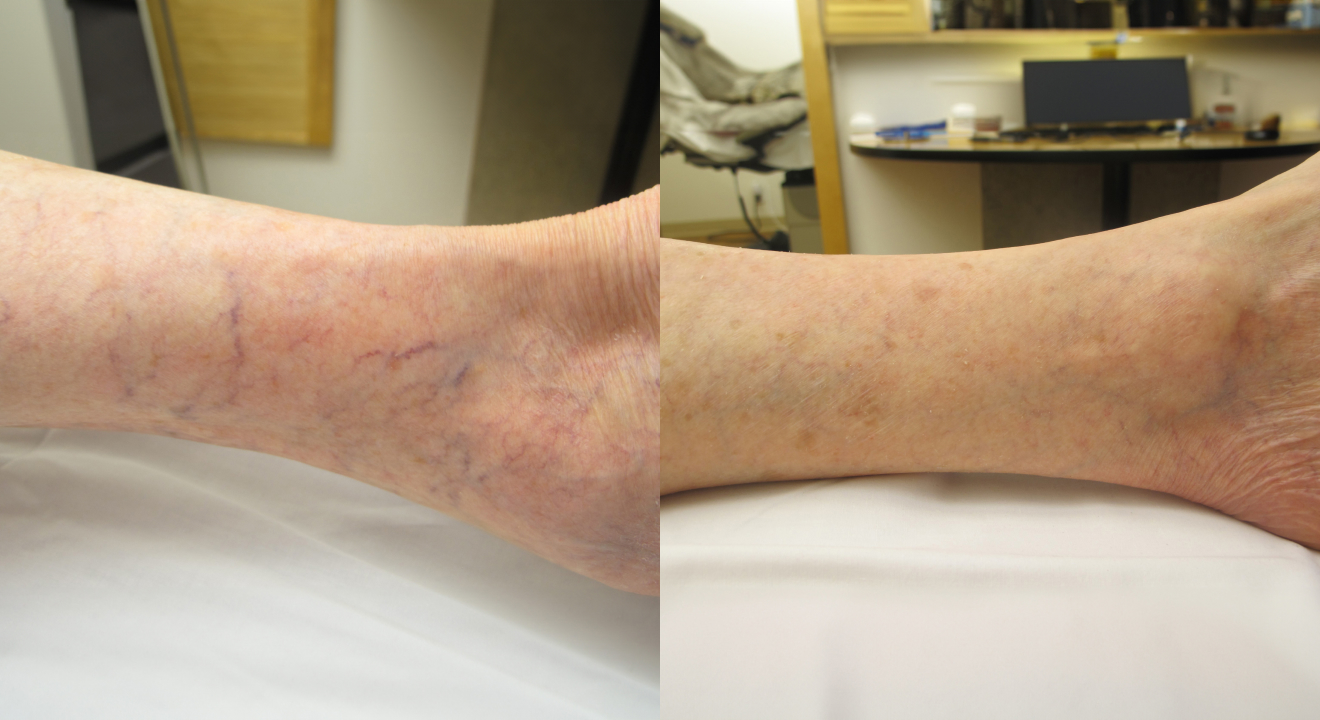
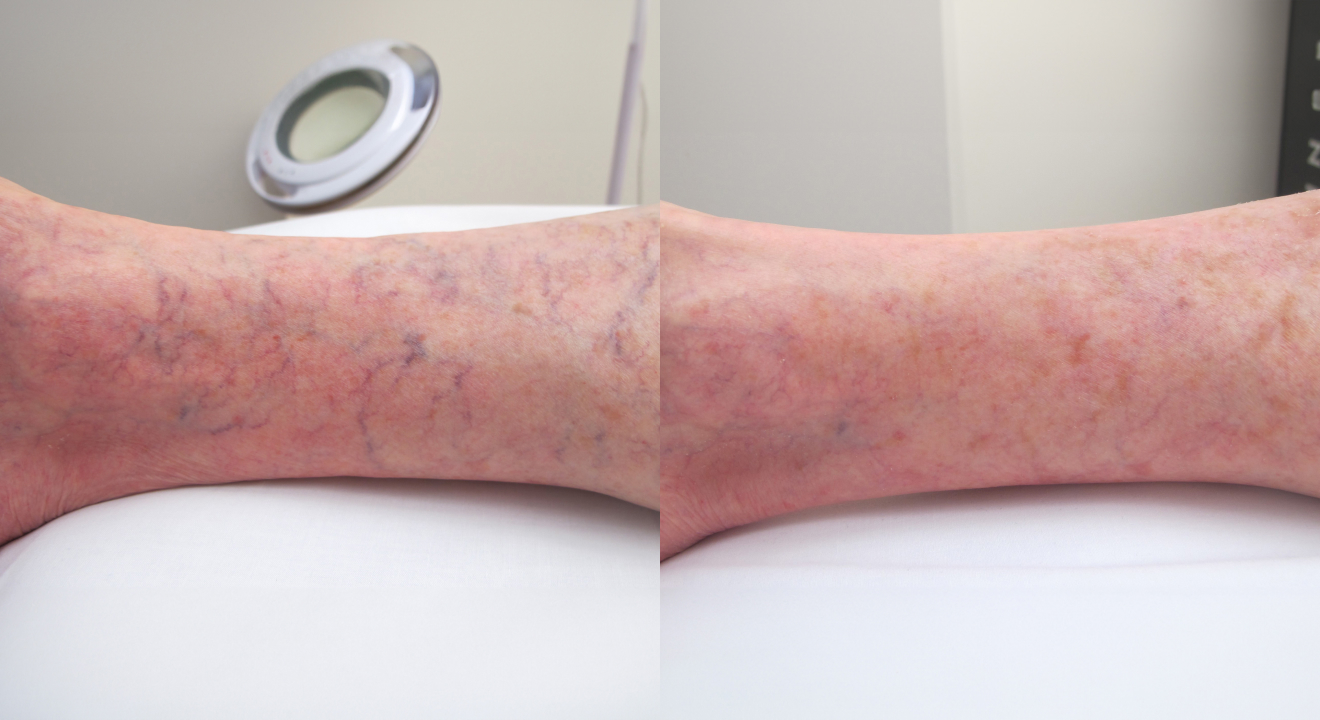
All patients shown have graciously provided informed consent for the use of their images.
What types of leg veins can be treated?
This treatment is appropriate for candidates with a lighter skin tone. We can treat three different types of leg veins with laser therapy. Spider veins are small, red or blue in colour, and appear on the surface of the skin in the form of thin lines or “webs”. Reticular veins, sometimes called “feeder veins”, are slightly larger blue veins that ‘branch’ into spider veins. Finally, angiomas are collections of blood vessels that form small, red growths on the skin. Varicose veins are not treatable with the CUTERA® Nd:YAG 1064nm laser.
How long do the results of leg vein treatment last?
Once the vessel has been broken down, it is gone for good, although new ones may appear over time. Most patients require a minimum of three treatments spaced eight weeks apart to see optimal reduction in the appearance of leg veins. Though most patients see some improvement by the eight week mark, in some cases it can take several months for your final results to become apparent. We’ll schedule a follow-up appointment after your initial course of treatment to determine if further treatments are necessary.
Your Providers

Etsuko
With over 30 years of medical aesthetics experience, patients love Etsuko’s warm nature and gentle touch.
Patient Resources
Your Questions Answered
We always begin with a thorough consultation to determine your goals and candidacy for laser vein treatment. On your treatment day, you may experience a minor, tolerable degree of heat or a “snapping” sensation against your skin as the laser pulses. It is important to cool the skin while delivering laser energy to avoid skin injury, and cooling gel and chilled laser tips will protect your skin during this treatment. Your legs may feel “achy” or tender after the treatment.
Although we only offer treatments with excellent safety profiles, laser leg vein treatment is still a medical procedure that carries a certain amount of risk, and it’s important to us that patients are fully educated on their treatment of interest so they can make an informed choice. Although the majority of patients do not experience complications, potential risks include:
- Redness and swelling: Rarely, a minor degree of redness and/or puffiness of the skin may follow your laser treatment. This usually lasts 1-2 hours and can be camouflaged with makeup. In rare instances, the redness or swelling may persist for 1-2 days.
- Bruising: It is uncommon to have any skin bruising following laser vein treatment. If bruising occurs, it can be camouflaged immediately, and will usually resolve within 8-10 days.
- Hemosiderin Staining: This is caused by iron leaking into the tissue from blood breakdown. If this does occur, it usually resolves over time, but in rare cases could be permanent.
- Skin wounds: It is exceedingly rare for lasers to cause a blister or skin wound. This is more of a risk in darker skin types. If a blister or skin wound develops, it may take 5-10 days to heal. In extremely rare instances, it may leave a noticeable lightening or darkening of the skin, or cause a scar.
- Infection: Infection is a rare possibility whenever the skin surface is disrupted. Through proper wound care and keeping the treated area clean, this risk is minimized. Should you develop a blister, you should notify the clinic and apply an antibiotic ointment (such as Polysporin) to the affected area as directed to help avoid a skin infection.
- Scarring: Scarring is a rare occurrence; however, it is a possibility whenever the skin surface has been disrupted. It is imperative that you follow all post-treatment instructions carefully to minimize this risk.
- Pigment changes: There is a very small risk that the treated area could become lighter (hypopigmentation) or darker (hyperpigmentation) in colour compared to the surrounding skin. This is usually temporary, but on rare occasions, it may become permanent.
- Eye protection: Patients are required to use Clinic 805 protective eyewear (shields) at all times during the treatment to prevent the possibility of laser injury to the eyes.
Sun protection: Leg vein treatment cannot be performed if you have a tan at the time of treatment. This includes the use of tanning lotions and beds. It is also essential to avoid sun exposure after the treatment for two weeks and to use a sunscreen with a minimum SPF 30 every day to protect your skin.
Patients who have darker skin types are not candidates for this treatment. If you are concerned about varicose veins, these types of veins are not treatable with the CUTERA® Nd:YAG 1064nm laser.
If you are pregnant, have been on Accutane within the past three months, or have peripheral vascular disease, you should not have laser leg vein treatment. You should advise us of all oral and topical medications that you are currently using prior to treatment, as some medications are photosensitizing and laser treatment should not be performed while you are taking such medications. Patients also cannot be treated if they are taking blood thinning medications.
If you are tanned, or have recently been exposed to the sun in the area to be treated, you may be more susceptible to potential side effects, such as blisters or crusts.
Patients may wish to consider sclerotherapy or surgery as alternatives to laser leg vein treatment.
Results
All patients shown have graciously provided informed consent for the use of their images.
Results
All patients shown have graciously provided informed consent for the use of their images.
Results
All patients shown have graciously provided informed consent for the use of their images.
Results
All patients shown have graciously provided informed consent for the use of their images.
Results
All patients shown have graciously provided informed consent for the use of their images.