
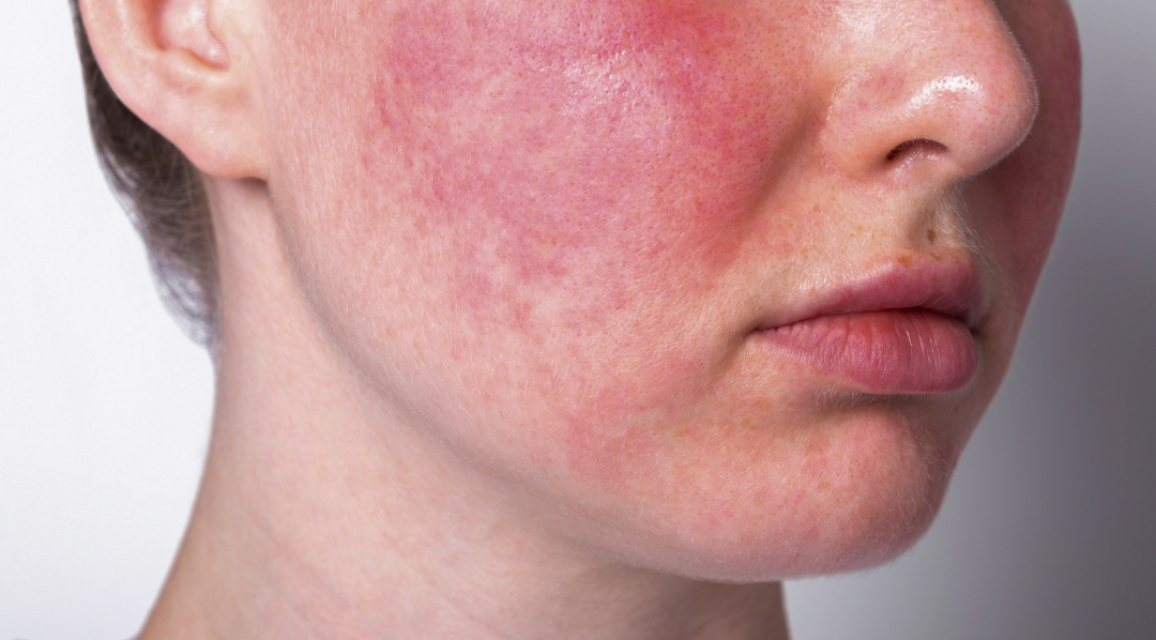
There is no permanent cure for rosacea, however, with a proper treatment plan you can effectively reduce symptoms, minimize redness, and restore a smooth, even skin tone you can feel confident about. When looking for the right rosacea treatment, it’s important to understand your unique triggers and seek a proper diagnosis from a qualified professional.
What is rosacea and what does it look like?
Although it can develop in multiple ways, rosacea typically first appears as redness on the cheeks, nose, chin, or forehead that comes and goes and may be mistaken for sunburn or skin irritation. It commonly occurs in lighter-skinned individuals around the age of thirty. Unfortunately, the redness may worsen and become more persistent over time, and small visible blood vessels can appear. Without treatment, bumps and pimples may develop, and burning and stinging sensations are also common. In more severe cases, the nose may become enlarged due to excess tissue. In many rosacea patients, ocular rosacea may also develop, leaving the eyes feeling irritated, watery, or bloodshot.
What causes rosacea?
The exact cause of rosacea is unknown, but it may be linked to an overactive immune system, genetics, and/or environmental factors. Common triggers for flare-ups include:
- Sunlight
- Alcohol
- Extreme temperatures
- Spicy foods
- Stress
- Medications that dilate blood vessels
- Exercise
To help identify the factors affecting your individual condition, consider keeping a journal to track potential triggers. Once you know your triggers, you can try to avoid them when possible.
What are the types of rosacea?
Rosacea exists on a spectrum, with signs and symptoms varying depending on the subtype.
- Type 1 is the most common and is characterized by facial redness, flushing, and visible blood vessels (spider veins).
- Type 2 is distinguished by papules (red bumps), pustules (pus-filled spots), and persistent redness, and may also include burning or stinging sensations.
- Type 3 involves thickening of the skin, most commonly on the nose, known as rhinophyma.
- Type 4, or ocular rosacea, affects the eyes. Symptoms may include dryness, watering, redness, irritation, or a gritty sensation. It can also affect the eyelids, causing inflammation or cysts.
Seeing a qualified healthcare provider for diagnosis will help guide the most appropriate treatment options.
How is rosacea treated?
At Clinic 805, patients meet with a medical aesthetic nurse for a comprehensive skin consultation, which includes a VISIA Complexion Analysis and a detailed medical history and lifestyle review.
Rosacea is diagnosed based on clinical signs and symptoms, including either persistent facial redness or skin thickening, or the presence of two or more major features such as bumps and pimples, flushing, visible blood vessels, or eye irritation (burning, stinging, or redness).
After assessing your skin, your aesthetic nurse will review your unique triggers and the importance of using non-irritating skincare, non-comedogenic makeup, and a daily physical sunscreen containing zinc oxide or titanium dioxide. An individualized treatment plan is then created based on your goals, which may include medical-grade skincare and/or laser and light-based therapies to reduce redness and improve overall skin health.
Machine therapy treatments for rosacea
Laser Genesis™ technology safely and effectively treats pore size, fine lines, wrinkles, and rosacea. By gently heating the upper dermis, the laser targets broken blood vessels, reduces redness in the skin and scars and stimulates collagen production. Most people experience an overall healthier skin complexion with improved texture and tone, less visible redness, reduced pore size, and a decrease in fine lines.
IPL technology safely and effectively treats pore size, fine lines, wrinkles, and rosacea. By gently heating the upper dermis, the laser targets broken blood vessels, reduces redness in the skin and scars and stimulates collagen production. Most people experience an overall healthier skin complexion with improved texture and tone, less visible redness, reduced pore size, and a decrease in fine lines.
How to manage your rosacea
Everyone’s skin is unique, and your rosacea treatment should be specific to your individual skin care needs. This often requires a combination of good skin care and self-care practices, including daily mineral, physical sunscreen use, that help you prevent flare-ups and control the signs and symptoms of rosacea. Although rosacea cannot be “cured,” patients can manage their symptoms with an effective treatment plan created by one of our medical aesthetic nurses. If you’re ready to reduce skin redness, even your complexion and skin tone and improve your confidence Clinic 805 is here to help.
Book a consultation with us today.


